
 Australia
 China
 Hongkong
 India
 Indonesia
 Japan
 Singapore
 South Korea
 Spain
 Thailand
 United States
 Vietnam
 Africa
 Africa 21-Country
 Africa 6-Country
 Americas
 Caribbean & South America 35-Country
 North America 6-Country
 South America 8-Country
 USA & Mexico
 USA Canada Mexico
 Asia
 Asia 12-Country
 Asia Pacific 15-Country
 Caucasus Mountains 3-Country
 Central Asia 4-Country
 China Hongkong Macau
 Singapore Malaysia
 Europe
 Balkan Region 12-Country
 Europe 33-Country
 Europe 49-Country
 UK & Ireland
 Global
 Global 108-Country
 Global 156-Country
 Global 45-Country
 Global 87-Country
 Oceania


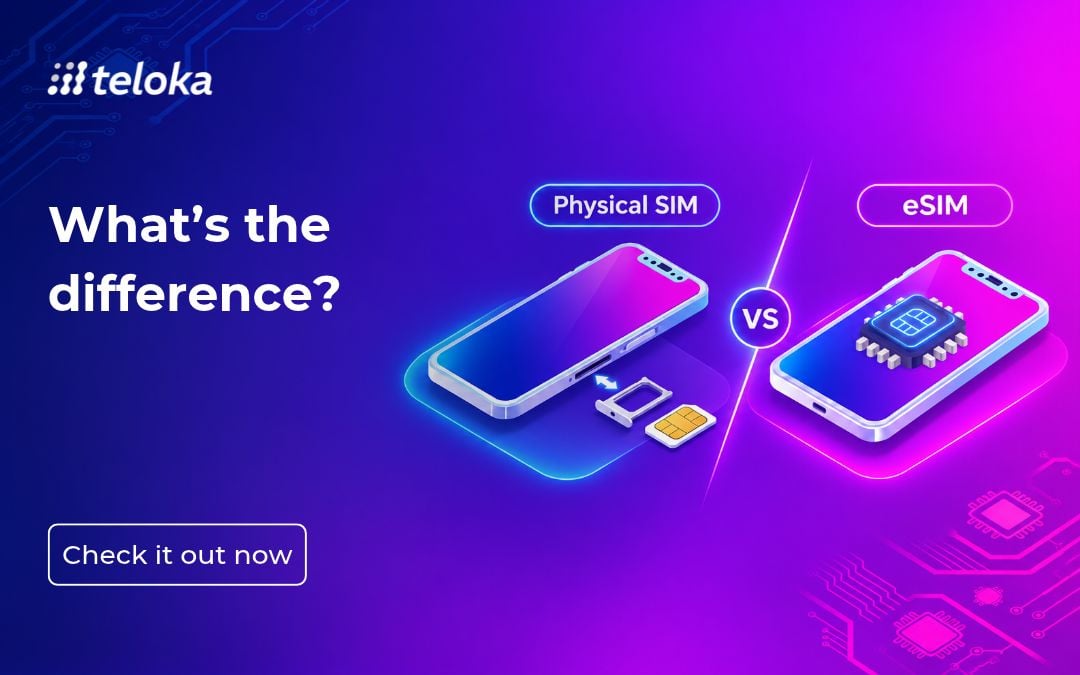
Switching to a new phone or planning your next trip abroad? You might be wondering whether to choose an eSIM or stick with a traditional physical SIM.
Both options connect your phone to a mobile network, but they work differently. A physical SIM is a removable card you insert into your phone, while an eSIM is built into your device and lets you set up a mobile plan digitally.
So, which one is better? If you travel frequently, use multiple mobile plans, or prefer setting things up online, eSIM can be more convenient. However, physical SIM cards are still a practical choice for older devices and people who regularly switch between phones.
Let's compare how they work, their pros and cons, and which option makes the most sense for your needs.
What Is an eSIM and How Does It Differ from a Physical SIM?
Before comparing the two, it helps to understand what each one actually does.
What is an eSIM?
An eSIM (embedded SIM) is a digital SIM that allows you to activate a cellular plan without inserting a physical SIM card.
Instead of buying and installing a removable card, you download a mobile plan directly to your eSIM-compatible device. Depending on your provider, you can set it up using a QR code, an activation link, an app, or your phone's built-in activation process.
One of the biggest advantages is flexibility. Compatible smartphones can store multiple eSIM profiles, allowing you to switch between plans without physically replacing a card.
This is especially useful when traveling internationally, as you can purchase an eSIM for your destination before leaving home.
What is a physical SIM?
A physical SIM is a small, removable card that identifies your mobile subscription and allows your phone to connect to a carrier's network.
Most modern phones with SIM trays use nano-SIM cards. To start using one, you insert the card into your device and complete any activation steps required by the carrier.
Physical SIM cards are straightforward to use and widely supported by phones with compatible SIM trays.
They're also convenient if you frequently move your mobile service between different devices. In many cases, you can simply remove the card from one unlocked phone and insert it into another.
The main difference comes down to how your mobile plan is installed and managed: eSIM works digitally, while a physical SIM requires a removable card.
eSIM vs Physical SIM: Key Differences at a Glance
Here's a side-by-side comparison to help you understand the practical differences.
Neither option is automatically better in every situation. eSIM generally offers more flexibility for managing plans digitally, while physical SIM cards remain useful for compatibility and easy card transfers.
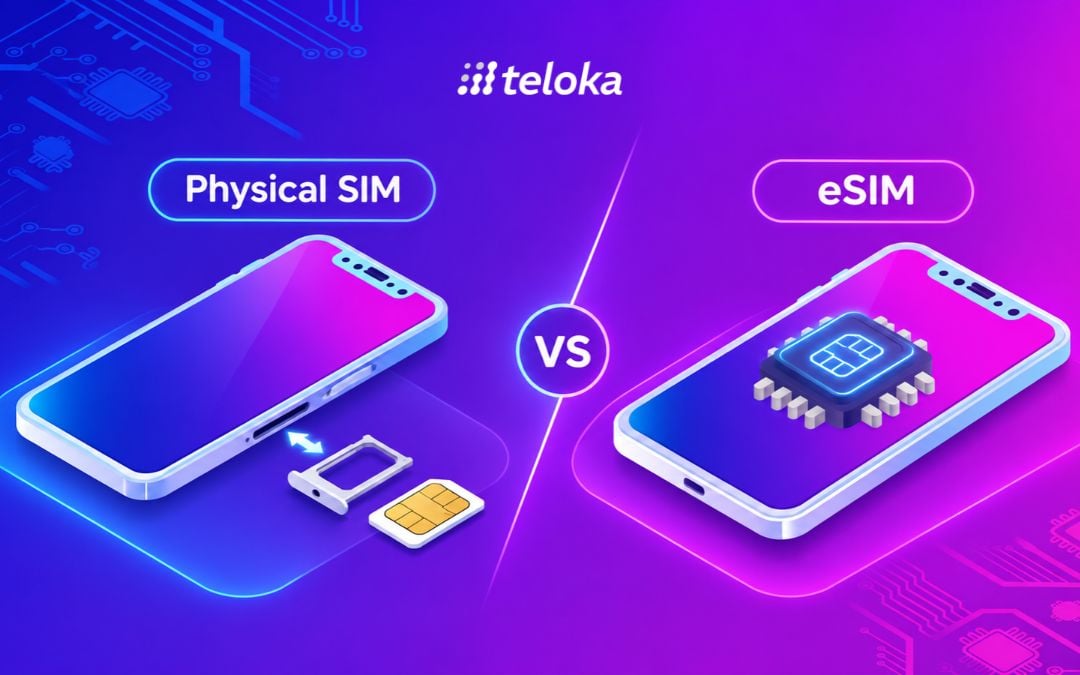 eSIM is soldered directly into the device, whereas a plastic Nano-SIM card is removable
Is eSIM More Secure Than a Physical SIM?
Both eSIM and physical SIM use security measures to protect mobile subscriptions. However, there are some practical differences worth understanding. An eSIM cannot be physically removed from your phone. If your device is lost or stolen, someone cannot simply take out the eSIM and insert it into another phone. With a physical SIM, an unauthorized person who gains access to the card may be able to use it in another compatible device, particularly if the SIM isn't protected by a PIN.
That said, eSIM isn't completely immune to security threats.
SIM-swap fraud, for example, can happen when a criminal tricks a mobile carrier into transferring someone's phone number to a SIM or eSIM under their control. This type of account takeover is not limited to physical SIM cards.
Similarly, phishing attacks, compromised carrier accounts, and stolen authentication credentials can affect users regardless of SIM type. The best approach is to protect your phone and mobile account with strong passwords, device authentication, and any additional security features your carrier provides.
In short, eSIM offers a useful security advantage because it can't be physically removed, but neither technology eliminates every mobile security risk.
eSIM vs Physical SIM for International Travel
When traveling abroad, the choice between eSIM and physical SIM becomes particularly important. You want internet access for maps, transportation apps, messaging, and travel information without spending too much time setting up your connection.
Both options can work well, but the better choice often depends on how and where you travel.
Why eSIM is convenient for international travelers
Imagine you've just landed in Tokyo after a long flight. You need to check the train route to your hotel, message your family, and look up directions. If you've already installed a Japan travel eSIM, you can enable the plan when you arrive and connect to a supported mobile network, following your provider's activation instructions. There's no need to find a SIM shop or remove your primary SIM.
Now imagine you're visiting Thailand, Vietnam, and Japan during the same trip.
Instead of purchasing separate physical SIM cards for each destination, you could choose a multi-country travel eSIM that covers all three countries, if available. Alternatively, you can store separate eSIM profiles and switch between them as needed.
For business travelers, eSIM can also make it easier to keep a regular phone number while using a separate plan for mobile data abroad.
These are some of the reasons eSIM has become an attractive option for international travel.
When a physical SIM may be better for travel
Despite these advantages, a physical SIM can still be the more practical choice in certain situations.
Your phone doesn't support eSIM. If you're using an older smartphone or an incompatible model, a physical travel SIM may be your only option.
You frequently switch between phones. A removable SIM card may be easier to transfer, especially when you use multiple compatible devices.
You need a local phone number. Some travel eSIM packages provide data only. If you need traditional local calls or SMS, compare plans carefully. A physical SIM with a local number may suit your needs, although some eSIM plans also include calling and texting.
You're staying abroad for an extended period. For longer stays, it's worth comparing travel eSIM packages with local prepaid or monthly plans. Depending on the destination, a local physical SIM or eSIM subscription may offer better value.
One important thing to remember: eSIM doesn't automatically provide better network coverage than a physical SIM. Signal strength and internet speeds primarily depend on the carrier, supported networks, your device, and local conditions.
How to stay connected abroad with Teloka
If your phone supports eSIM and you're planning an international trip, Teloka offers travel eSIM plans for destinations around the world, including regional and multi-country options.
Browse available plans on Teloka.com, choose a package that fits your destination and data needs, and receive your eSIM details digitally after purchase. For a smoother start to your trip, it's best to check your phone's compatibility and install your eSIM while you still have a stable internet connection.
Keep in mind that activation policies vary by plan. Some packages start their validity period upon installation, while others begin when the eSIM connects to a supported network at your destination. Always review the plan details before installing or activating it.
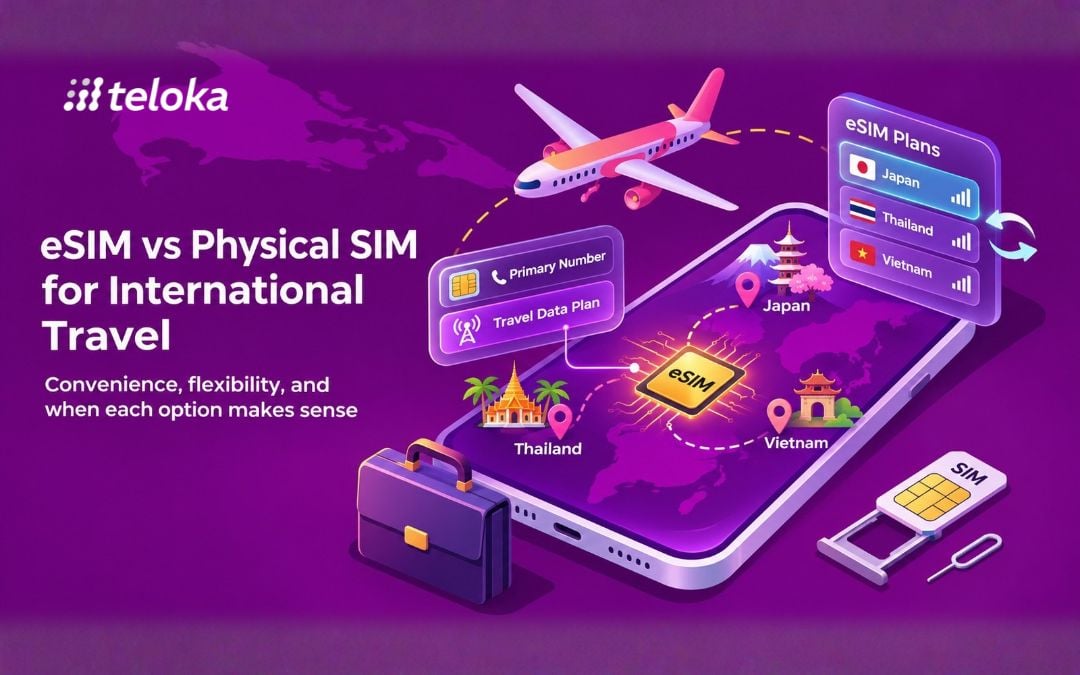 eSIM technology allows international travelers to manage multiple country profiles directly on one device
Which Should You Choose: eSIM or Physical SIM?
Still unsure? Here are a few simple questions to help you decide.
Does your phone support eSIM?
This should be your first consideration. If your device doesn't support eSIM, choose a compatible physical SIM.
Do you travel internationally?
If you take frequent trips abroad, an eSIM can make it easier to purchase and manage travel data plans without swapping cards.
Do you regularly move your SIM between phones?
If you often switch between devices, a physical SIM may be more convenient, especially if your carrier doesn't offer easy eSIM transfers.
Do you need two numbers or mobile plans?
If your phone supports Dual SIM, an eSIM may allow you to keep your primary number while using a second plan for work or travel.
Are you mainly concerned about cost?
Compare actual plans rather than assuming one SIM technology is always cheaper. Prices depend on the destination, provider, data allowance, validity period, and included services.
The bottom line: Choose eSIM if you value digital convenience, flexible plan management, and easy preparation for international trips. Choose physical SIM if your phone doesn't support eSIM or you frequently move your mobile service between devices.
For some users, a combination of both is the most practical solution.
Frequently Asked Questions About eSIM vs Physical SIM
1. Is eSIM faster than a physical SIM?
No. eSIM doesn't automatically provide faster internet speeds.
Both technologies connect to mobile networks, and performance depends on your carrier, network coverage, device capabilities, and the plan you're using.
If an eSIM and physical SIM access the same network under comparable conditions, their speeds can be similar.
2. Can I use eSIM and physical SIM at the same time?
Yes, on compatible Dual SIM smartphones.
For example, you may keep your regular physical SIM for calls and text messages while using a travel eSIM for mobile data.
Some newer smartphones also support two active eSIMs without requiring a physical SIM card.
Check your device's specifications to confirm which combinations it supports.
3. Can I transfer an eSIM to another phone?
Sometimes, but the process depends on your carrier, device, and eSIM plan.
Certain carriers and smartphones support eSIM transfers between devices. Others require a new activation code or assistance from customer support.
Many travel eSIMs have restrictions on transferring or reinstalling a profile, so always check the provider's policy before removing it from your phone.
4. Do I need Wi-Fi to install an eSIM?
You generally need an internet connection to download and install an eSIM profile. Wi-Fi is often the easiest option, although an existing cellular connection may also work.
For international travel, it's usually best to complete the installation before leaving home or while connected to a reliable Wi-Fi network.
5. How do I check if my phone supports eSIM?
On an iPhone, go to Settings > General > About and look for an EID. You can also check the Cellular or Mobile Data settings for an option to add an eSIM.
On Android, the steps vary by manufacturer. Look under your SIM manager or mobile network settings for an option such as Add eSIM.
You should also confirm that your exact phone model and regional variant support eSIM and that the device is not locked to an incompatible carrier.
6. Can I keep my phone number when switching to eSIM?
Yes, if your carrier supports converting your existing mobile line from a physical SIM to an eSIM.
Changing the SIM format doesn't necessarily mean changing your phone number.
However, buying a separate travel eSIM usually gives you an additional mobile plan rather than transferring your existing number.
7. Is eSIM cheaper than a physical SIM?
Not necessarily.
The SIM technology itself doesn't determine the overall price. The cost depends on the provider, destination, plan duration, data allowance, and whether calls or SMS are included.
For travelers, eSIM may help avoid certain roaming costs or the inconvenience of purchasing a local card, but it's still important to compare available packages.
8. Can I use an eSIM in any country?
An eSIM works only where your chosen provider and plan offer supported network coverage.
For example, a regional eSIM may cover several countries, while a country-specific plan is designed for one destination.
Before purchasing, confirm the supported countries, available networks, and plan conditions.
Final Thoughts: eSIM or Physical SIM?
Both eSIM and physical SIM cards serve the same essential purpose: keeping your phone connected.
The difference lies in how you set them up and how easily you can manage your mobile plans.
For travelers and people who value convenience, eSIM offers a flexible way to prepare for trips, switch between plans, and keep a regular number available on compatible devices.
Physical SIM cards, meanwhile, remain a reliable and practical option for phones without eSIM support and users who prefer moving a removable card between devices.
Ultimately, the best choice is the one that fits your phone and your everyday needs.
Planning your next trip abroad? Explore Teloka's eSIM plans and find a data package that suits your destination and travel plans.